

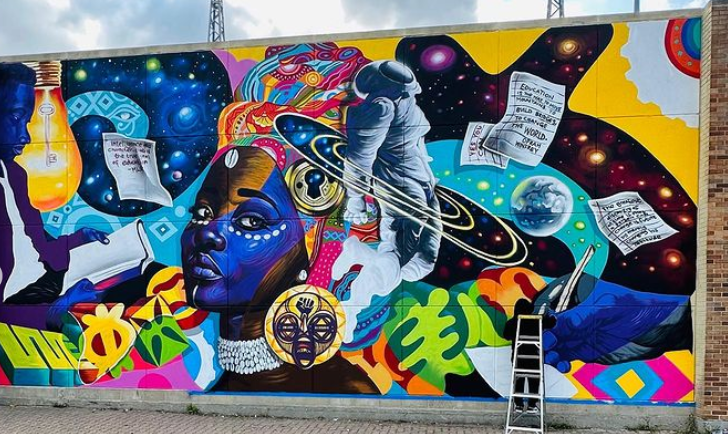
Photo credit: @citywalls
In the pages of history, art has always been a vital part of Black American culture. This cultural legacy has endured and thrived despite the many hardships faced by Black people when they first came to America. While the idea of the American Dream promised prosperity, it remained out of reach for those who were forcibly brought to this country in chains.
The era of slavery cast a long, dark shadow. It deliberately denied education and literary opportunities to the enslaved Black population. The goal was to stifle their abilities and block effective communication. But, in the face of these tough challenges, the spirit of Black Americans persevered.
Art, in all its forms, emerged as a key part of daily life. It provided a secret way of communicating and learning within the Black community. So if you wonder why you are a visual learner, it is probably because at one point that was the only way we could learn. It was a unique and subtle language that conveyed hidden messages and built unity among those who created and understood its nuances. Art went beyond just communication; it also helped Black people cope with the deep emotional challenges they faced during this traumatic period.
Because they couldn't express their feelings through regular means, enslaved Black individuals turned to art. It became an outlet for sharing emotions and experiences that only they truly understood (Harris and Marcelo, 2021). Because of this, art has become a critical part of our culture, even in present day.
From song and dance to the diverse and distinctive hairstyles, Black individuals who endured the hardships of enslavement showcased their creativity and resilience through various forms of art. This artistic influence has become an enduring pillar of our culture, and the resurgence of art in the heart of Detroit is indeed a cause for celebration!
As I mentioned earlier, art is an essential form of expression within our culture, serving as a powerful means of making a statement. This includes graffiti, which, in many cases, represents claims to territory, expressions of anger, or a call for revolution. However, it is most commonly associated with rebellion (Eden Gallery, 2021). Graffiti has inadvertently led to legal repercussions disproportionately impacting the African American community.
Today, the city of Detroit has undergone a transformation, witnessing a revival of its urban landscape with buildings now adorned by positive and uplifting artistic expressions.
When the mural outside Russell Woods Church of Christ was unveiled last Sunday, a deep sense of belonging washed over me. Throughout the week, I eagerly anticipated moments when I could gaze at this vibrant masterpiece adorning Detroit's streets, celebrating the city's creative spirit and the shared mission to beautify our community. These are the moments that truly define Detroit as my home.
With Detroit becoming a canvas for art that reflects our people, our stories, and our shared interests, I can envision a future marked by greater unity among the diverse lives that call Detroit home. This flourishing art scene has the potential to bring our community together, providing a platform to honor our collective culture and heritage. It's a wonderful transformation that promises to make Detroit an even more inviting and inclusive place for all.
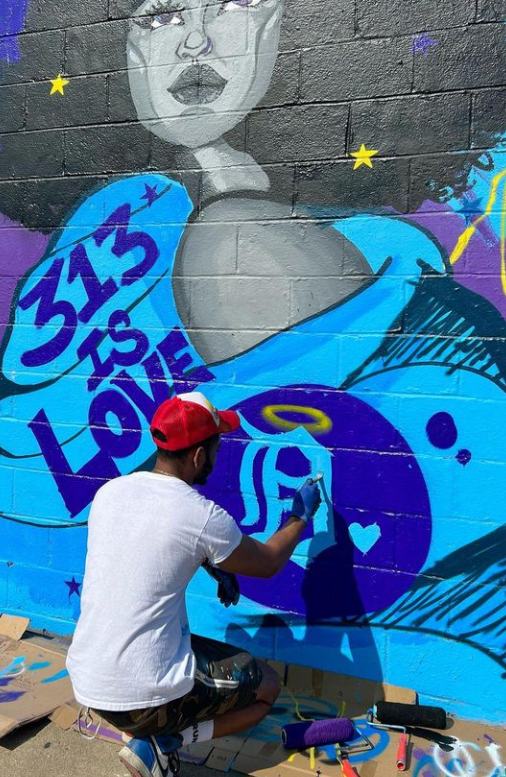
Photo credit: @citywalls
Add comment
Comments